Renting in Downtown LA? What we check before you sign.
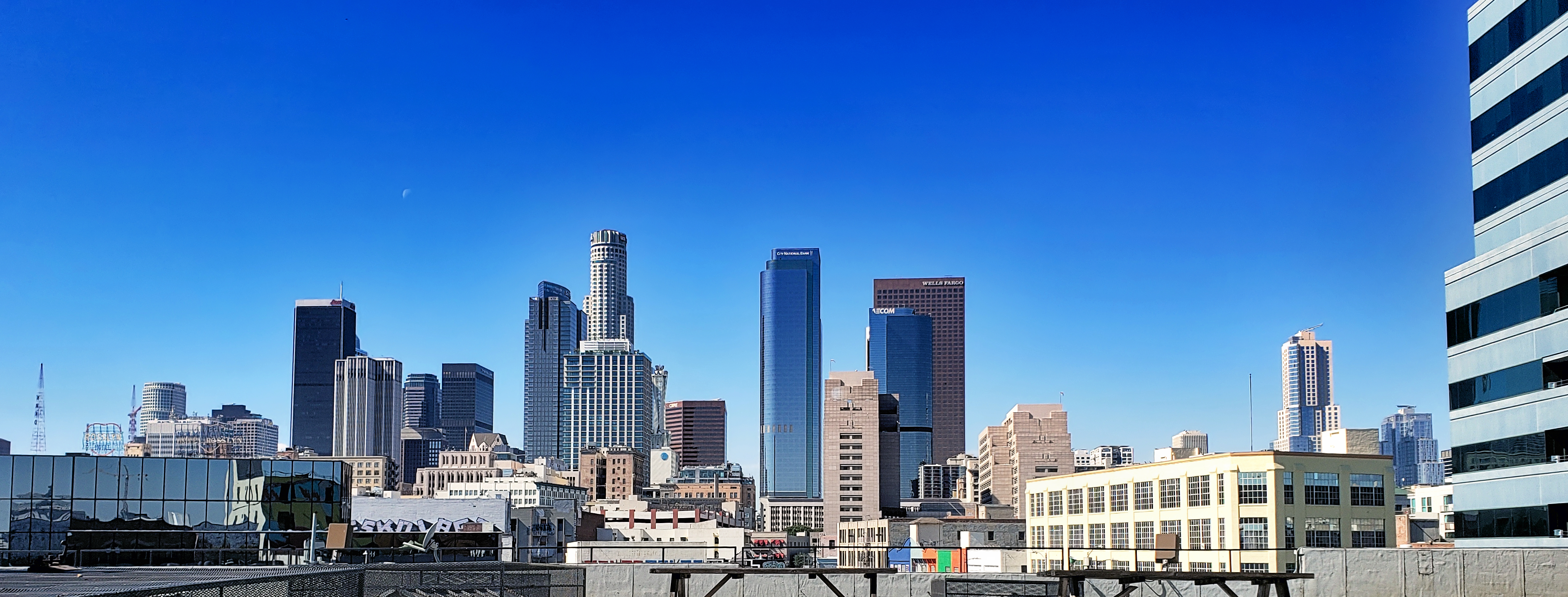
Downtown Los Angeles (DTLA) covers the Financial District, the Historic Core, South Park, Little Tokyo, the Fashion District and the Arts District. It's the densest piece of LA built upward, with the city's tallest residential towers, its biggest cultural institutions (Walt Disney Concert Hall, The Broad, MOCA), and its main transit hub at Union Station. Housing is mostly converted lofts (in the Historic Core), new high-rises (South Park, Bunker Hill), and warehouse conversions (Arts District).
The renter profile in Downtown LA.
DTLA renters skew younger and professional: tech, finance, hospitality, creative industries, plus a meaningful student presence (USC nearby). Less family-dense than most LA neighborhoods because most units are 1-bed and studio. The Arts District attracts a more design-and-creative crowd; the Financial District is more corporate; South Park is sports-and-events-adjacent (Crypto.com Arena, LA Live).
What it's like living in Downtown LA.
Daily life in DTLA depends heavily on which sub-neighborhood you're in. The Historic Core is walkable and dense (lofts, restaurants, clubs); South Park is event-driven (Lakers, Kings, Clippers, concerts); the Arts District is restaurants and galleries with very limited grocery; Little Tokyo is the small-scale food and culture pocket. The Metro hub (Union Station) connects to all rail lines (A/B/D/E/L) which makes DTLA the most transit-friendly LA neighborhood by far.
Around Downtown LA.
Walt Disney Concert Hall
Frank Gehry-designed home of the LA Philharmonic on Bunker Hill.
The Broad
Contemporary art museum by Eli and Edythe Broad — Yayoi Kusama infinity room is the headliner.
MOCA Grand Avenue
Museum of Contemporary Art LA on Grand Avenue.
Grand Central Market
1917 historic food hall on Broadway — vendors range from old-school egg sandwich counters to modern Thai and Chinese.
Bradbury Building
1893 architectural landmark with a famous wrought-iron atrium — featured in Blade Runner.
Los Angeles Central Library
Stunning 1926 main library with the rotunda murals and a modern 1993 wing.
Crypto.com Arena
Home of the Lakers, Kings, Clippers and major concerts in South Park.
Union Station
LA's main rail and subway hub — Metrolink, Amtrak, all Metro rail lines, FlyAway bus to LAX.
Context only. These places are not part of the report. Always verify schools, opening hours and access independently before signing a lease.
What people ask about Downtown LA.
Is DTLA actually safe to live in?
DTLA varies dramatically block by block. The Financial District / Bunker Hill / South Park stretches are corporate and well-lit; the Historic Core has improved significantly over the last 15 years; some streets adjacent to Skid Row remain difficult. As anywhere, it depends on your specific block. We walk the block at the visit time and report what they observe.
Do I need a car in DTLA?
DTLA is one of the few LA neighborhoods where you can live without a car. All Metro rail lines connect at Union Station; bike infrastructure is improving (Spring Street bike lane, the LA River bike path); ride-share fills any gap. The catch: parking in DTLA buildings often costs $200-400/month extra, so verify whether your unit's parking is included.
Is the Arts District really artists, or is it gentrified?
The Arts District started as a 1980s warehouse-and-studios pocket and has gentrified meaningfully — many of the original artist tenants have been priced out. It's still creative-industry-adjacent (lots of design firms, the Hauser & Wirth gallery, Soho House) but it's now a higher-end residential neighborhood with restaurants, not an artist colony.
Is event noise a real problem near Crypto.com Arena?
Yes, on game and concert nights. South Park apartments within 2-3 blocks of the arena hear post-event crowd noise, traffic horns, and ride-share queues until ~midnight. Apartments on the western side of LA Live see helicopter coverage on Lakers / Kings / playoff nights. Worth measuring.
Are there schools in DTLA?
DTLA has a mix of LAUSD, charter, and magnet options (Metro Charter, Para Los Niños) but it's not the strongest LA neighborhood for public-school families — most school-age kids in DTLA are in private schools or commute to LAUSD options elsewhere.
More neighborhoods in Los Angeles.
Looking at a place in Downtown LA?
Send us first.
We visit the property, run a structured 10-category review, and deliver an honest report within 24 hours.