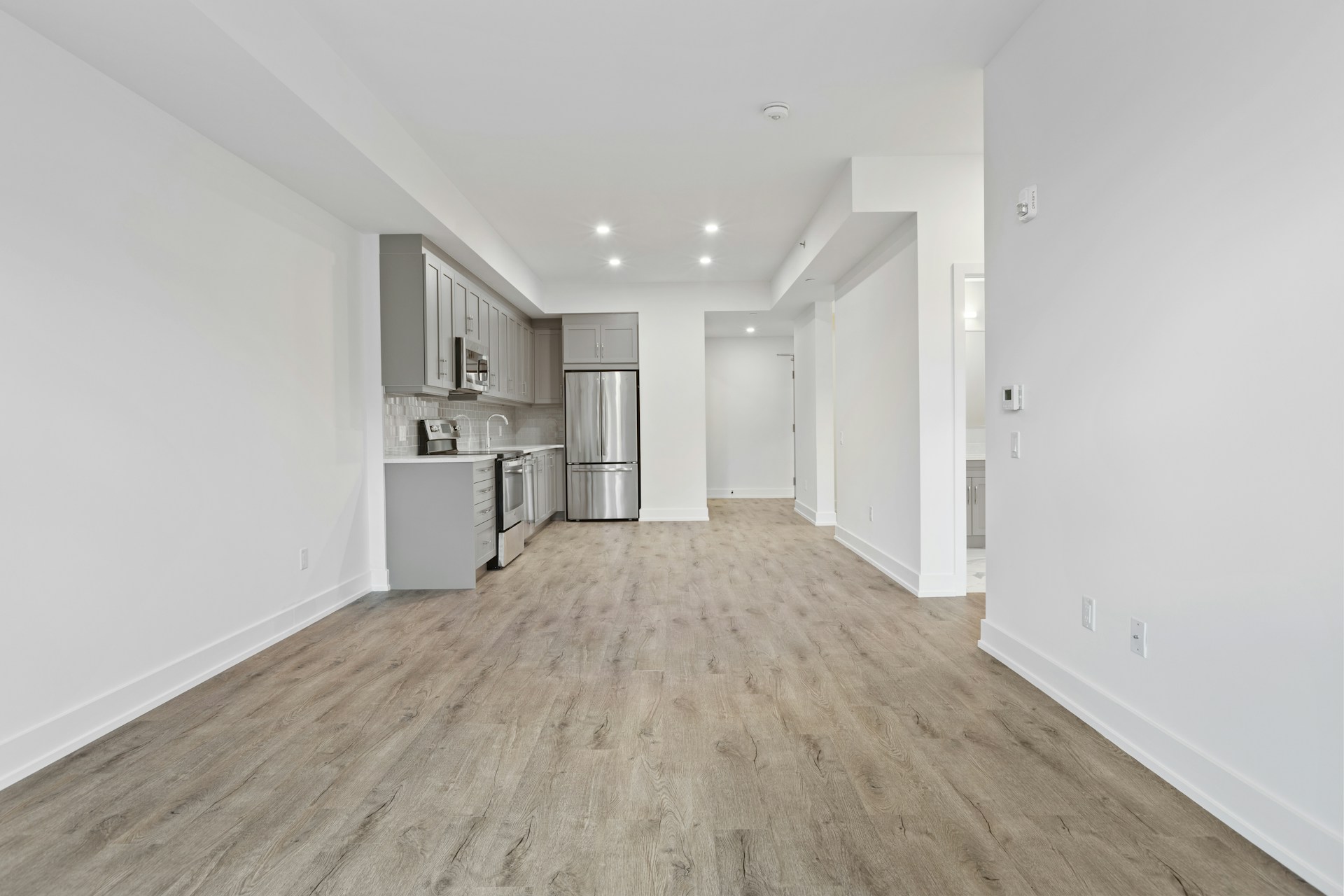
AB 2801: The 3 Photo Sets That Now Decide Every LA Deposit Dispute
If you own a duplex in Highland Park or a fourplex in Palms, the security deposit used to be an argument you could win with a firm letter and a cleaning invoice. Not anymore. California's AB 2801 made photographs the deciding evidence in deposit deductions, and it is specific about what you shoot, when you shoot it, and what you send the tenant afterward. Get it wrong and the deduction can evaporate, sometimes along with your right to claim anything at all.
Both deadlines have already passed, so this is the rulebook you operate under today, not a heads-up about next year. Here is what changed, where small LA owners trip up, and a routine that holds up when a tenant pushes back.
What AB 2801 actually changed
AB 2801 amended Civil Code 1950.5, the section that governs security deposits in California (the full text is on the state legislature's site). The short version: deductions now have to be backed by photographs, and there are three mandatory photo moments in a tenancy. One set at move-in. One set at move-out, before anyone cleans or repairs anything. One set after the work you deducted for is done.
The law also tightened what you can deduct in the first place. Claims against the deposit are limited to a reasonable amount necessary to restore the unit to the condition it was in at the start of the tenancy, exclusive of ordinary wear and tear. That last phrase does a lot of work, and we will come back to it.
The dates that already apply
- April 1, 2025. Move-out photos became mandatory: one set within a reasonable time after the tenant returns possession, before any repairs or cleaning, and another set once the repairs or cleaning you are deducting for are complete.
- July 1, 2025. Move-in photos became mandatory for every tenancy starting on or after that date, taken immediately before or at the start of the tenancy.
So every lease signed since July 2025 needs a move-in photo set on file. Older tenancies have no move-in set to produce, but the move-out and post-repair requirements still apply the day that tenant hands back the keys.
Move-in photos: shoot like you will have to prove it
The most common mistake is treating the move-in set as a formality. Four wide shots of empty rooms prove that the apartment existed. They prove nothing about the condition of the oven, the grout, or the closet doors, which is exactly what you will be arguing about in two years.
A useful move-in set works room by room: a wide shot for context, then close-ups of floors, walls, counters, and fixtures. Open the oven and the fridge. Shoot inside cabinets and drawers, the window tracks, the shower caulk. Twenty minutes with a phone, one dated folder per tenancy. This set is the baseline every future deduction gets measured against.
Move-out is two photo sets, not one
The sequence matters. The law wants the unit photographed after possession comes back to you and before any repairs or cleaning. The classic error: the cleaning crew comes Monday, the owner shoots photos Tuesday. Those photos are useless as evidence of what the tenant left behind, because they document your crew's work, not the tenant's condition.
Then, once the repairs or cleaning you plan to deduct for are done, you shoot again. Before and after, every time. Skip the after set and the deduction is exposed.
The itemized statement got heavier
The 21-day deadline did not move: within 21 days of move-out you either return the full deposit or send an itemized statement of deductions. What changed is what has to travel with that statement. Under AB 2801 you now include the photographs, along with a written explanation of the cost of each repair or cleaning. You can deliver the photos by mail, email, flash drive, or an online link.
The older rules still stack on top, as laid out in the California Courts security deposit guide: deductions over $125 need receipts or invoices attached, and if you or your own employee did the work, you owe a description of the work, how long it took, and the hourly rate, which has to be reasonable.
Wear and tear is not damage
This is where most deposit disputes are actually lost. Faded paint after a three-year tenancy, carpet worn flat in the hallway, small nail holes from picture frames: that is ordinary wear and tear, and it is not deductible. A pet stain soaked into the subfloor, a cracked tile, a wall anchor ripped out with the drywall around it: that is damage.
AB 2801 also closed a habit many owners had. You can no longer charge for professional carpet cleaning, or any other professional cleaning, unless it is reasonably necessary to return the unit to the condition it was in at move-in. A blanket cleaning fee on every turnover does not survive that language. And deducting the full price of brand-new carpet to replace carpet that was already near the end of its life is the kind of claim that falls apart in front of a judge.
Notice how every one of those calls depends on the same thing: a move-in record to compare against. Without it, “the unit was in perfect condition when they moved in” is just your word.
What getting it wrong costs
The penalties are not symbolic. An owner who in bad faith fails to follow the photo requirements loses the right to claim any of the deposit. Not the disputed line item, the whole thing. Bad-faith retention of a deposit can also expose you to statutory damages of up to twice the deposit, on top of actual damages. Most of these fights end in small claims court, where the side with an organized, dated photo record tends to have a short hearing.
A routine that survives a dispute
- Shoot in the same room order at move-in and move-out, so the two sets mirror each other.
- Wide shot first, then details: floors, walls, counters, fixtures, inside appliances, cabinets, window tracks.
- Keep one folder per tenancy, dated, backed up somewhere that is not your phone.
- Calendar the 21-day deadline the day the keys come back.
- Notify the tenant in writing of their right to request a pre-move-out walkthrough (California requires it), and do the walkthrough if they ask. Many deductions die there, because the tenant fixes the issue before leaving, which is cheaper for everyone.
And if you would rather not be the photographer, that is a job you can hand off. A Scoutmyplace move-in condition report or move-out condition report is exactly this record: factual, unscored, room by room, built around AB 2801's photo moments, delivered within 24 hours. Tenants also argue less with a record neither side produced.
One caveat, since this is a law article written by people who document apartments for a living: this is general information about how the statute works, not legal advice. If you are already in a dispute, a landlord-tenant attorney is money well spent.
The takeaway. AB 2801 turned deposit deductions into an evidence game, and the evidence is created months before any dispute starts. The owners who win are not the ones who write the best letter in 21 days. They are the ones who had the camera out on day one.